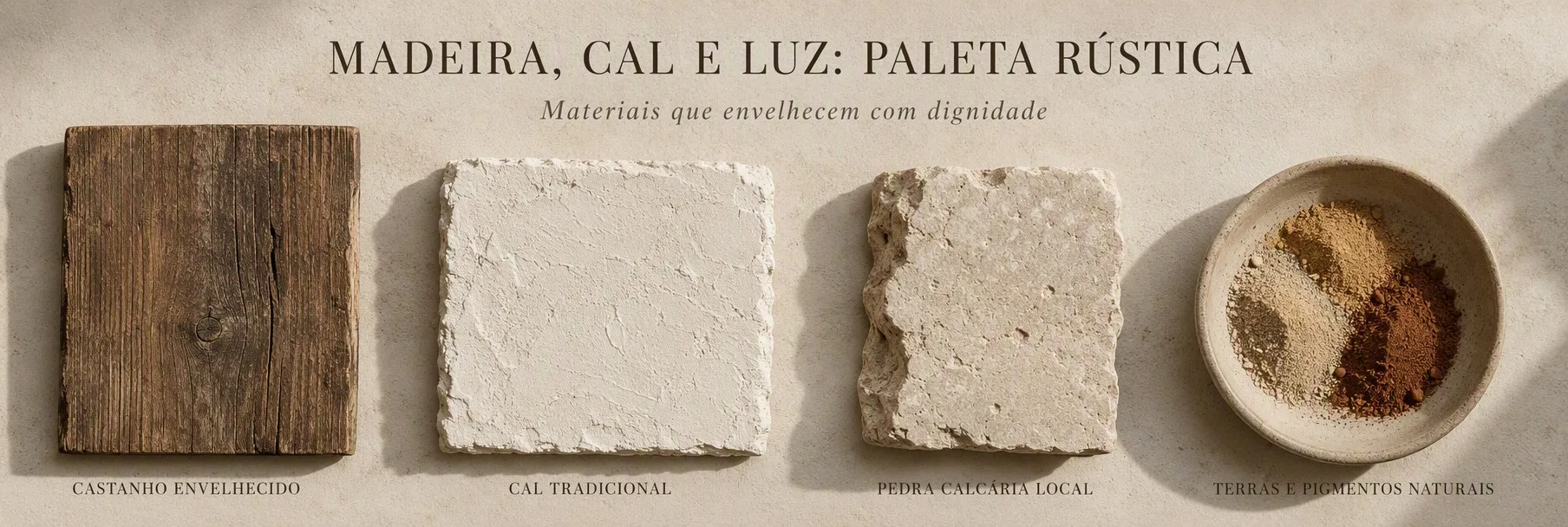
Wood, Lime and Light: The Rustic Palette
There are projects where the first important decision is not the drawing of the floor plan. It is the kitchen table at the construction site, covered in samples — a piece of wood, a handful of lime, a stone taken from the very land. That is how I began this project in central Portugal: sitting at a site table, deciding not the shape of the house, but what it would be made of.
It is not material vanity. It is climate. Central Portugal has dry, harsh summers, humid, cold winters, and a raking light that, at certain times of day, is almost aggressive. A wrong material doesn't just ruin the aesthetics — it ruins itself, year after year, until it looks old instead of aged. And there is an enormous difference between the two.
Wood that ages well
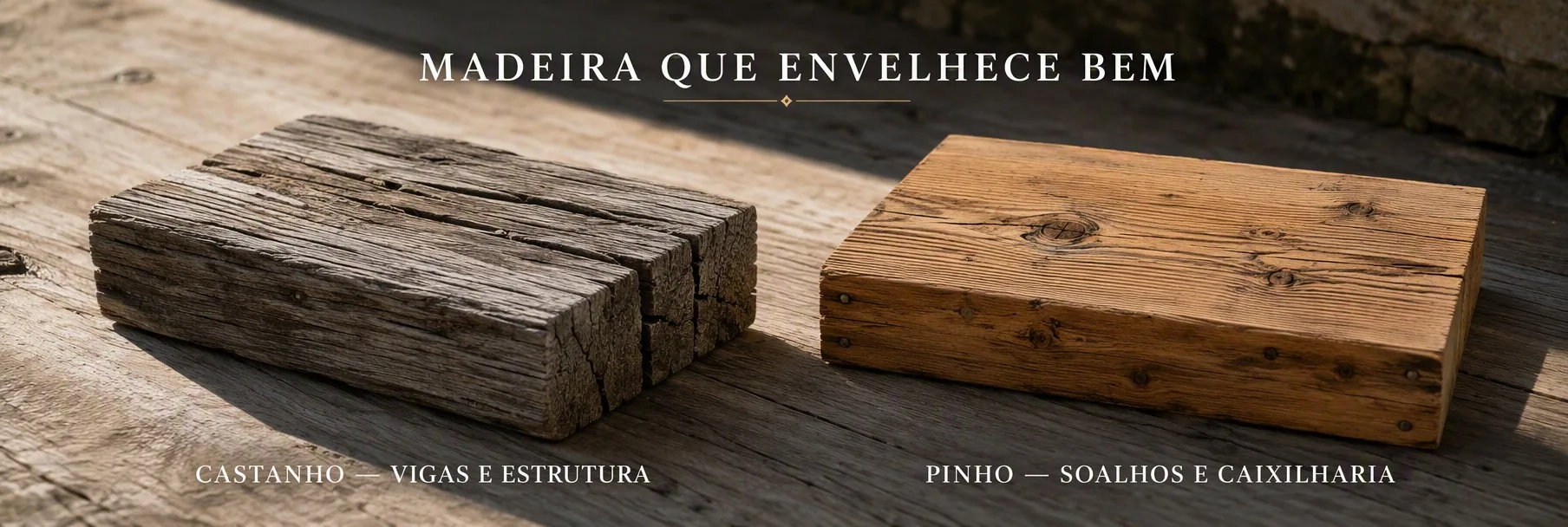
The first choice was the wood — and the first lesson, learned the worst possible way in a previous project, is that not all wood wants to age in plain sight. I chose chestnut for the beams and the exposed structure: a dense wood, with enough tannin to resist without heavy treatment, and one that gains that grey, cracked patina which, instead of looking like degradation, looks like authority. For floors and joinery, local pine — softer, warmer in tone, cheaper, and honest about what it is: a working wood, not a display one.
The rule I use, and that I recommend to anyone choosing: always ask "will this wood be left exposed to the setting sun without protection?" If the answer is yes, it's chestnut or nothing. I've seen untreated pine survive a single summer and turn into split firewood.
The lime that breathes
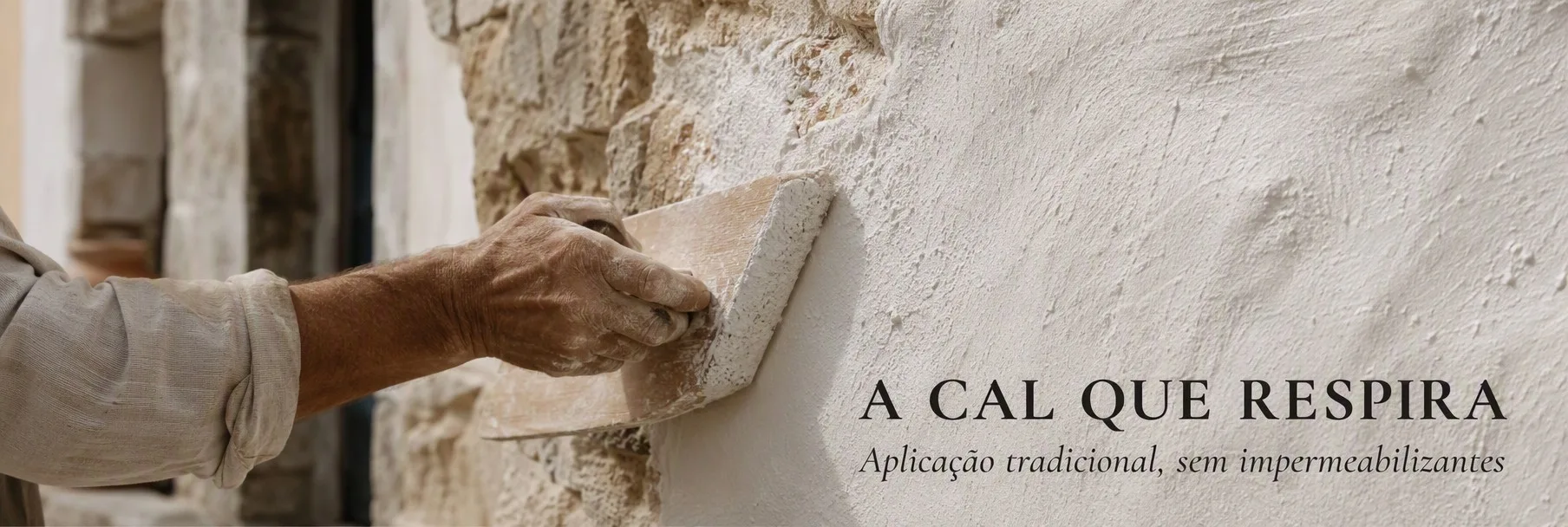
On lime, I'm capable of becoming tedious at dinner conversations. On a traditional stone wall, with lime mortar joints, putting cement or plastic paint on top is like putting a plastic bag around someone while they sleep — the wall needs to breathe, to let out the humidity it absorbs in winter, and cement simply doesn't allow it.
Traditional lime applied by trowel, without waterproofing agents, costs more in skilled labour — there are fewer and fewer craftsmen who know how to apply it well — but it pays itself back in decades of service life without cracks or blisters. And there's an aesthetic quality no paint imitates: the irregularity. Each trowel pass is slightly different from the previous one, and the wall ends up with a living texture, which changes with the time of day.
The light that draws the wall
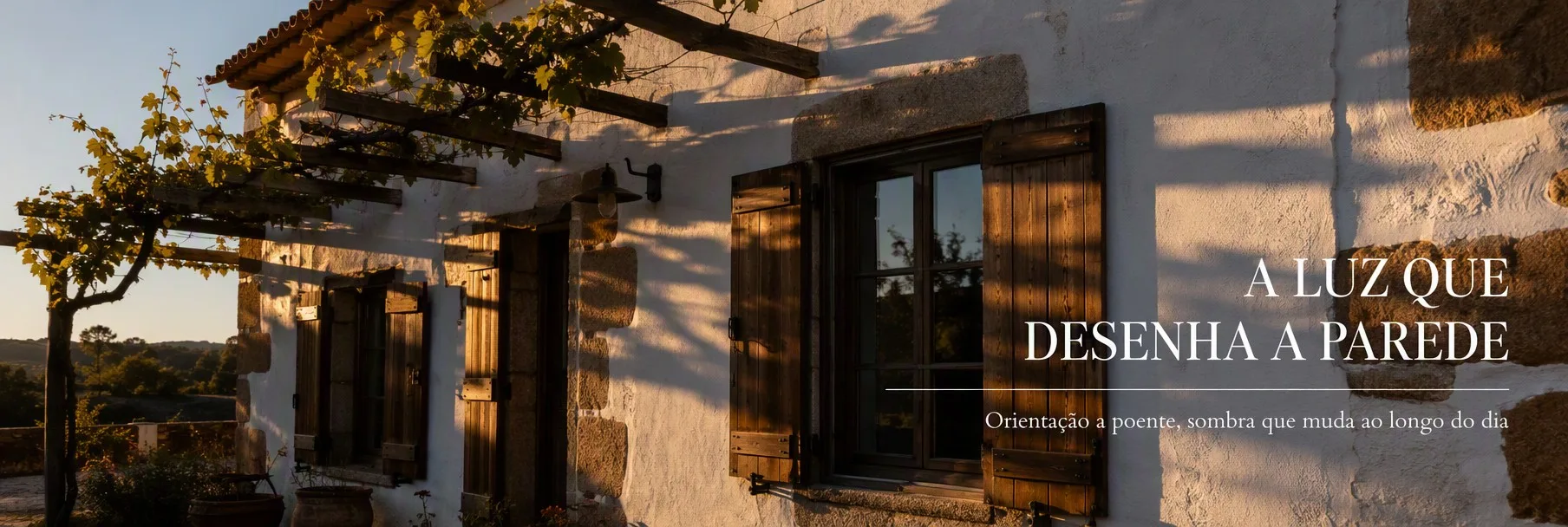
This brings me to the third material of the palette — which isn't quite a material, but behaves like one: light. A white lime wall is not a neutral surface. It is a canvas. Throughout the day, the raking light of the setting sun comes in beneath the pergola, passes through the vine leaves, hits the wooden shutters and draws long shadows that move, stretch and disappear.
Orienting the main façade to the west was a deliberate decision, not a coincidence of the land. I wanted the house to have this time of day when architecture stops being about walls and becomes about the light that crosses them. No render shows this the way being there does, at seven in the evening, watching the pergola's shadow advance over the lime.
A palette, not a shopping list
In the end, choosing rustic materials is not choosing what "looks" old. It is choosing what knows how to age in the specific climate where it will live — which here, in central Portugal, means harsh sun, humid winters and a light that doesn't forgive lazy surfaces. Wood that gains character instead of rotting. Lime that breathes instead of suffocating. And an orientation thought out so that light, too, is a finishing material.
Are you planning a materials palette for a rustic project? Talk to me before you decide — there are choices that can only be corrected before the work begins.